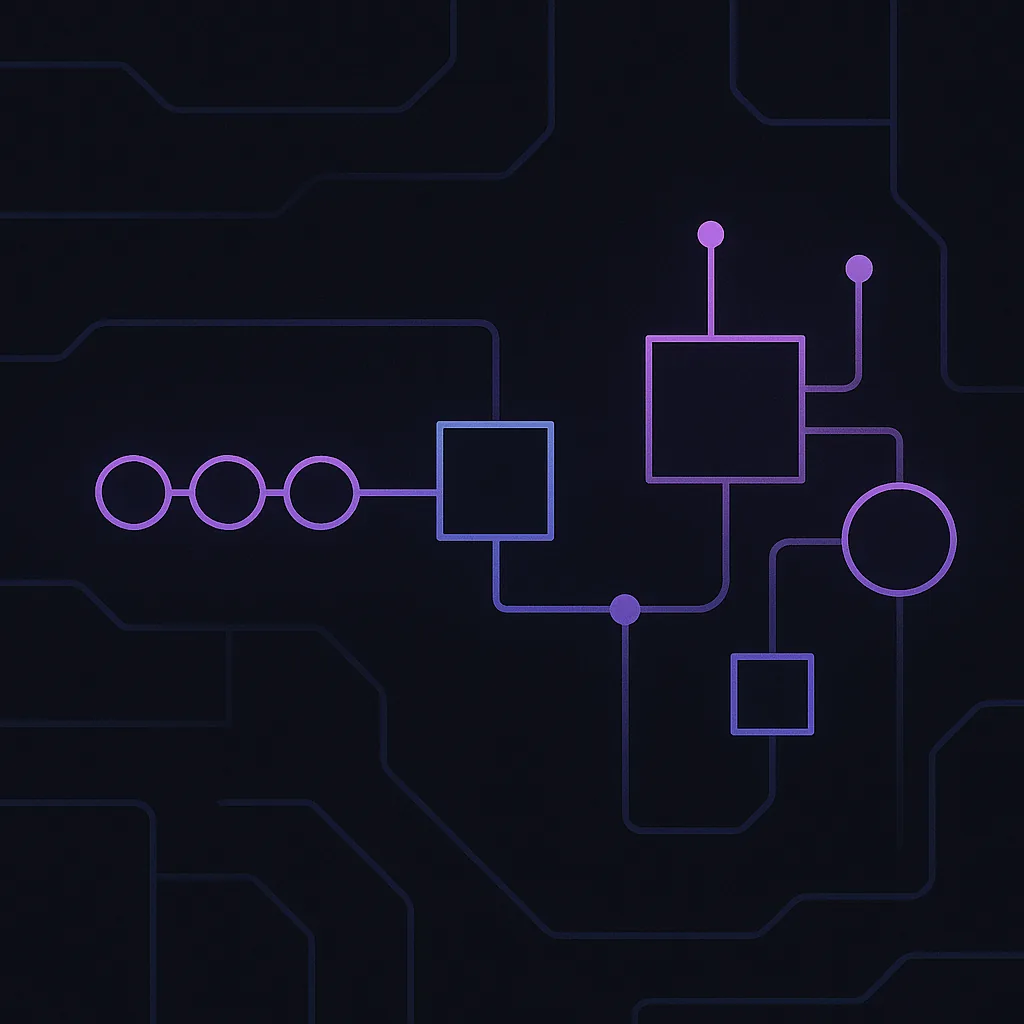
Agentic Workflows: From Simple Chains to Complex AI Agents
In the ever-evolving landscape of software engineering, the concept of agentic workflows has emerged as a pivotal trend. As we move into 2025 and beyond, the transition from simple task chains to complex AI agents is reshaping how we design, build, and deploy systems. This blog post delves into the intricacies of agentic workflows, exploring their significance, implementation, and impact on modern software development.
Why Agentic Workflows Matter Now
The rise of AI and machine learning has transformed the way we approach problem-solving in software engineering. Traditional workflows, often linear and rigid, are being replaced by dynamic, intelligent agents capable of making decisions and adapting to changing environments. This shift is crucial in 2025, as businesses demand more responsive, scalable, and efficient systems to stay competitive.
Agentic workflows enable systems to operate autonomously, reducing the need for human intervention and allowing for real-time decision-making. This is particularly important in industries such as finance, healthcare, and logistics, where timely and accurate responses are critical.
Deep Dive into Concepts
From Simple Chains to AI Agents
Traditional workflows often resemble a series of chained tasks, where each step depends on the completion of the previous one. While effective for straightforward processes, this approach lacks flexibility and adaptability.
In contrast, agentic workflows leverage AI agents that can operate independently, make decisions, and learn from their environment. These agents can be orchestrated to work collaboratively, forming a network of intelligent entities.
Real-World Use Cases and Architecture Patterns
Consider a logistics company that needs to optimize delivery routes in real-time. A traditional workflow might involve pre-defined routes and manual adjustments. An agentic workflow, however, could use AI agents to analyze traffic data, weather conditions, and delivery priorities to dynamically adjust routes.
In terms of architecture, microservices play a crucial role in enabling agentic workflows. Each AI agent can be encapsulated within a microservice, allowing for independent deployment, scaling, and updates.
Pros, Cons, and Challenges
Pros
- Scalability: AI agents can be scaled independently, allowing systems to handle increased loads efficiently.
- Adaptability: Agents can learn and adapt to new data, improving decision-making over time.
- Autonomy: Reduced need for human intervention, leading to faster and more reliable operations.
Cons
- Complexity: Designing and managing agentic workflows can be complex, requiring expertise in AI and system design.
- Resource Intensive: AI agents may require significant computational resources, impacting cost and infrastructure.
Challenges
- Integration: Ensuring seamless communication between agents and existing systems can be challenging.
- Security: Protecting sensitive data and ensuring secure interactions between agents is critical.
Best Practices / Recommendations
- Start Small: Begin with a pilot project to understand the intricacies of agentic workflows before scaling.
- Leverage Cloud Services: Utilize cloud platforms for scalable infrastructure and AI services.
- Focus on Security: Implement robust security measures to protect data and agent interactions.
- Continuous Learning: Ensure agents are designed to learn and adapt, improving their performance over time.
Common Mistakes Engineers Make
- Overcomplicating Initial Designs: Engineers often try to implement complex agentic workflows from the start, leading to unnecessary complexity.
- Neglecting Security: Failing to prioritize security can lead to vulnerabilities in agent interactions.
- Ignoring Scalability: Not designing for scalability can result in performance bottlenecks as the system grows.
When NOT to Use This Approach
- Simple Processes: For straightforward tasks, traditional workflows may be more efficient and cost-effective.
- Limited Resources: If computational resources are constrained, the overhead of AI agents may not be justified.
- Lack of Expertise: Without the necessary expertise in AI and system design, implementing agentic workflows can be risky.
How This Impacts System Design Interviews
Understanding agentic workflows can be a differentiator in system design interviews. Candidates who can articulate the benefits and challenges of AI agents, and propose scalable architectures, demonstrate a forward-thinking approach to problem-solving.
Future Outlook
As AI technology continues to advance, agentic workflows will become increasingly sophisticated, enabling even greater levels of autonomy and intelligence. The integration of AI agents with emerging technologies such as quantum computing and edge computing will further enhance their capabilities.
Conclusion
Agentic workflows represent a significant evolution in software engineering, offering the potential for more intelligent, adaptable, and efficient systems. By understanding the intricacies of this approach and implementing best practices, engineers can harness the power of AI agents to drive innovation and success in the years to come.
In this blog post, we've explored the transition from simple task chains to complex AI agents, highlighting their significance, implementation, and impact on modern software development. As we move forward, embracing agentic workflows will be key to staying competitive in an increasingly dynamic and demanding technological landscape.