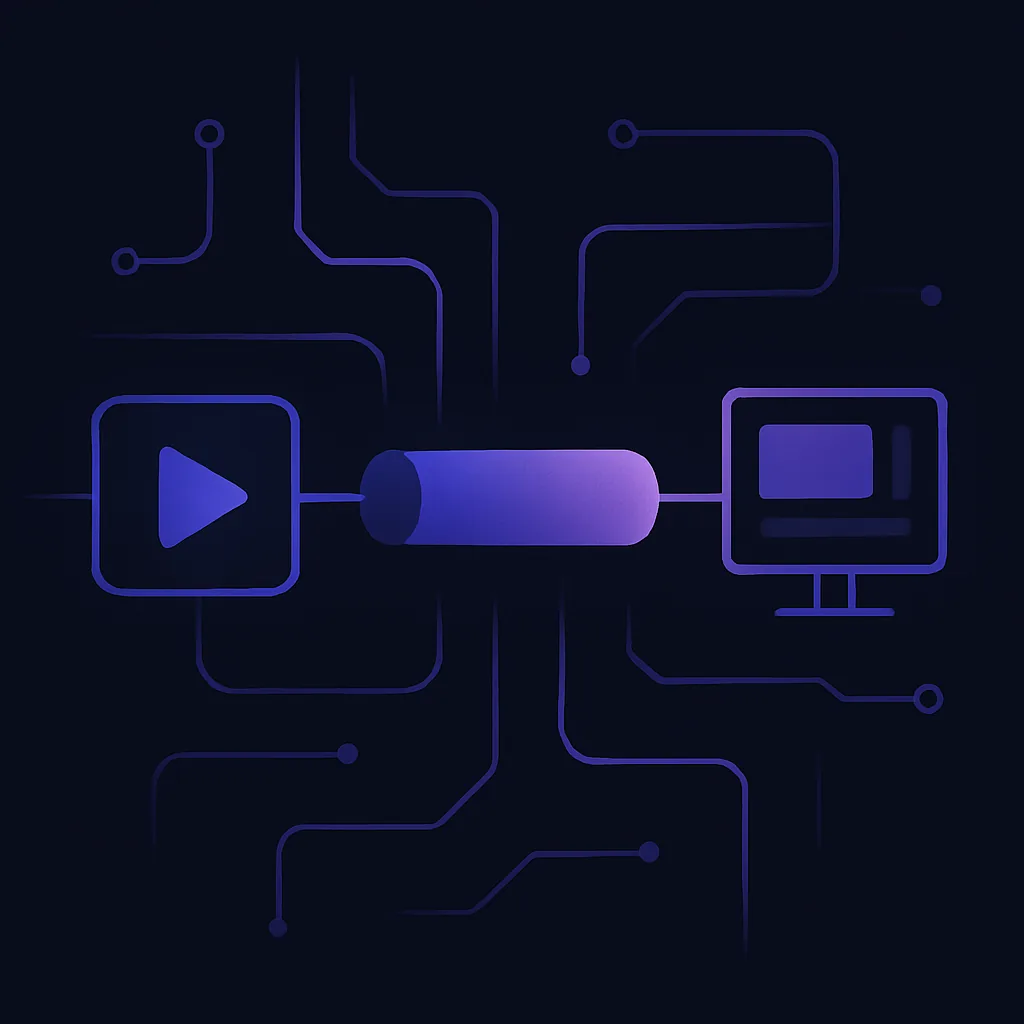
Designing a Video Transcoding Pipeline: A Modern Approach
In the ever-evolving landscape of digital media, video transcoding has become a cornerstone for delivering content across diverse platforms and devices. As we step into 2025, the demand for high-quality, adaptive streaming has never been higher. This blog post delves into the intricacies of designing a video transcoding pipeline, offering insights into modern practices, real-world applications, and the challenges engineers face today.
Why Video Transcoding Matters Now
With the proliferation of 4K and 8K content, virtual reality, and augmented reality experiences, the need for efficient video transcoding pipelines is critical. Consumers expect seamless streaming experiences, regardless of their device or network conditions. This demand drives the need for scalable, resilient, and cost-effective transcoding solutions that can adapt to varying requirements.
Deep Dive into Video Transcoding Concepts
What is Video Transcoding?
Video transcoding involves converting a video file from one format to another, ensuring compatibility with different devices and platforms. This process typically includes changing the video codec, resolution, bitrate, and format.
Key Components of a Transcoding Pipeline
- Ingestion Service: Captures and stores raw video files.
- Transcoding Service: Converts videos into multiple formats and resolutions.
- Storage Service: Manages the storage of transcoded files.
- Delivery Service: Distributes the final video to end-users.
Example Architecture
Real-World Use Cases and Architecture Patterns
Microservices and Cloud Integration
Modern transcoding pipelines often leverage microservices architecture, allowing for independent scaling and deployment of each component. Cloud platforms like AWS, Google Cloud, and Azure provide scalable infrastructure and services such as AWS Elemental MediaConvert or Google Cloud Transcoder API.
Example: A Scalable Transcoding Service with Spring Boot
@RestController
@RequestMapping("/transcode")
public class TranscodingController {

    @PostMapping
    public ResponseEntity<String> transcodeVideo(@RequestBody VideoRequest request) {
        // Logic to initiate transcoding
        return ResponseEntity.ok("Transcoding started");
    }
}
Pros, Cons, and Challenges
Pros:
- Scalability: Easily handle varying loads.
- Flexibility: Adapt to new formats and codecs.
- Resilience: Fault-tolerant design.
Cons:
- Complexity: Requires robust orchestration and monitoring.
- Cost: Cloud services can be expensive at scale.
Challenges:
- Latency: Minimizing delay in live streaming scenarios.
- Quality: Balancing compression with video quality.
Best Practices and Recommendations
- Use Containerization: Dockerize services for consistent deployment.
- Implement CI/CD: Automate testing and deployment for rapid iteration.
- Monitor Performance: Use tools like Prometheus and Grafana for real-time insights.
- Optimize Costs: Leverage spot instances and reserved capacity in the cloud.
Common Mistakes Engineers Make
- Over-Engineering: Adding unnecessary complexity to the pipeline.
- Ignoring Latency: Failing to optimize for low-latency streaming.
- Poor Error Handling: Not implementing robust error recovery mechanisms.
When NOT to Use This Approach
- Small Scale Projects: If the project doesn't require high scalability, simpler solutions may suffice.
- Limited Budget: Cloud-based solutions can be costly without careful management.
How This Impacts System Design Interviews
Understanding video transcoding pipelines can be a valuable asset in system design interviews. It demonstrates knowledge of distributed systems, scalability, and real-world problem-solving. Be prepared to discuss trade-offs and justify design decisions.
Future Outlook
As AI and machine learning continue to advance, expect to see more intelligent transcoding solutions that can predict and adapt to user preferences and network conditions in real-time. Edge computing will also play a significant role in reducing latency and improving user experiences.
Conclusion
Designing a video transcoding pipeline in 2025 requires a deep understanding of modern technologies and practices. By leveraging microservices, cloud infrastructure, and best practices, engineers can build scalable and efficient systems that meet the demands of today's digital media landscape. Remember to balance complexity with practicality and always keep an eye on emerging trends and technologies.