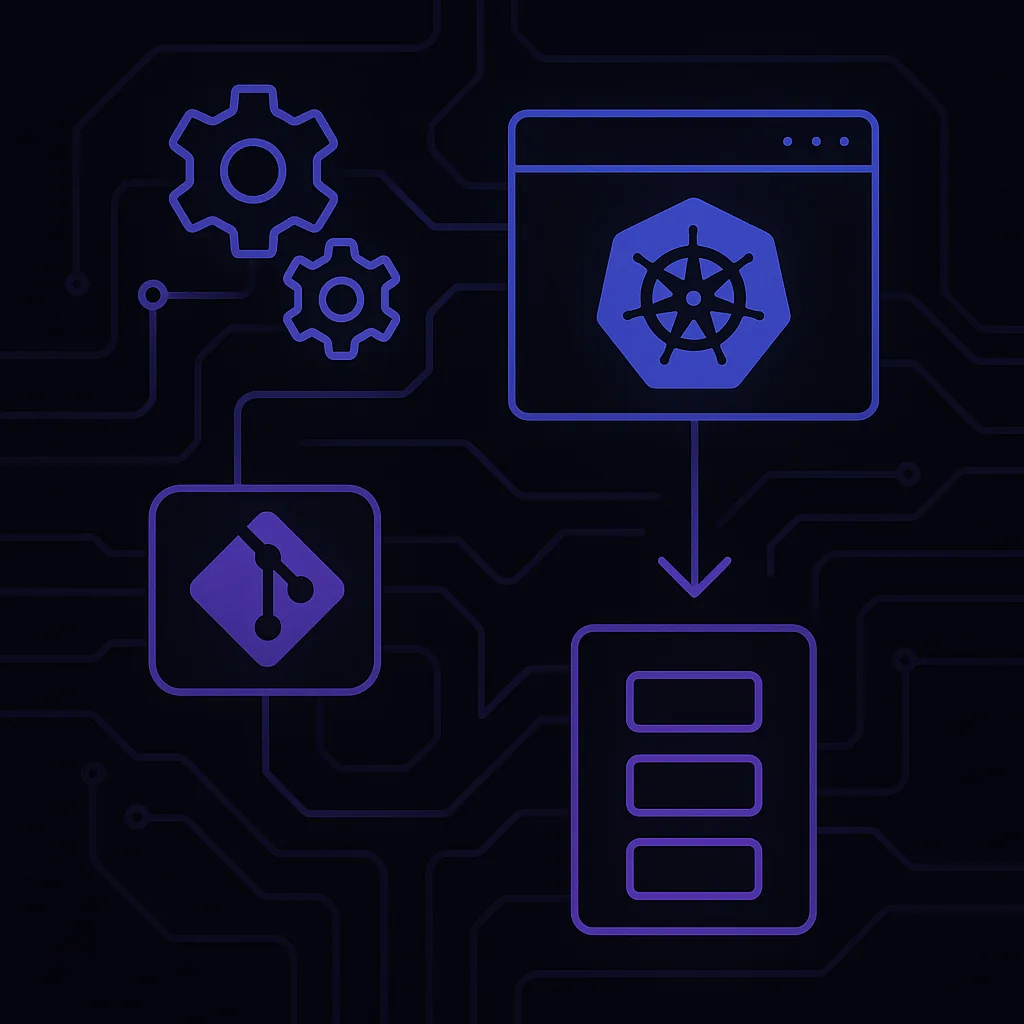
GitOps with ArgoCD: Kubernetes Deployments the Right Way
In the ever-evolving landscape of software development, the need for efficient, reliable, and scalable deployment strategies has never been more critical. As we step into 2025, the concept of GitOps, particularly with tools like ArgoCD, is gaining traction as the go-to approach for managing Kubernetes deployments. But what makes GitOps with ArgoCD the "right way"? Let's dive in.
Why GitOps Matters Now
The shift towards cloud-native architectures and microservices has transformed how we build and deploy applications. Kubernetes has become the de facto standard for container orchestration, but managing Kubernetes deployments can be complex and error-prone. GitOps offers a solution by treating Git as the single source of truth for declarative infrastructure and application configurations. This approach not only enhances collaboration but also ensures consistency across environments.
In 2025, as organizations continue to scale their cloud-native applications, the demand for automated, reliable, and auditable deployment processes is at an all-time high. GitOps with ArgoCD addresses these needs by providing a seamless integration between Git repositories and Kubernetes clusters.
Deep Dive into GitOps and ArgoCD
What is GitOps?
GitOps is a set of practices that use Git repositories as the source of truth for managing infrastructure and application configurations. By leveraging Git's version control capabilities, teams can track changes, roll back to previous states, and collaborate more effectively.
Introducing ArgoCD
ArgoCD is a declarative, GitOps continuous delivery tool for Kubernetes. It automates the deployment of applications to Kubernetes clusters by monitoring Git repositories and applying the desired state to the cluster.
Here's a simple example of how ArgoCD works:
- Define the Desired State: Store your Kubernetes manifests (YAML files) in a Git repository.
- Sync with ArgoCD: ArgoCD continuously monitors the Git repository for changes.
- Apply Changes: When changes are detected, ArgoCD applies them to the Kubernetes cluster, ensuring the cluster's state matches the desired state in Git.
Real-World Use Cases
Use Case 1: Multi-Environment Deployments
In a typical microservices architecture, managing multiple environments (e.g., dev, staging, production) can be challenging. With ArgoCD, you can define environment-specific configurations in separate Git branches or directories. ArgoCD will ensure each environment is deployed with the correct configuration, reducing the risk of configuration drift.
Use Case 2: Disaster Recovery
GitOps provides a robust disaster recovery strategy. By maintaining the entire infrastructure and application state in Git, you can quickly restore a cluster to a known good state after a failure. ArgoCD's ability to roll back to previous states simplifies recovery processes.
Pros, Cons, and Challenges
Pros
- Consistency: Ensures that the deployed state matches the desired state in Git.
- Auditability: Every change is tracked in Git, providing a clear audit trail.
- Collaboration: Teams can collaborate using familiar Git workflows.
Cons
- Complexity: Initial setup and configuration can be complex.
- Learning Curve: Teams need to be familiar with GitOps principles and tools like ArgoCD.
Challenges
- Security: Ensuring secure access to Git repositories and Kubernetes clusters.
- Scalability: Managing large-scale deployments with multiple clusters and environments.
Best Practices and Recommendations
- Use Branching Strategies: Implement Git branching strategies to manage different environments and features.
- Automate Testing: Integrate automated testing into your GitOps pipeline to catch issues early.
- Monitor and Alert: Use monitoring tools to detect and alert on discrepancies between the desired and actual state.
Common Mistakes Engineers Make
- Ignoring Security: Failing to secure Git repositories and Kubernetes clusters can lead to vulnerabilities.
- Overcomplicating Configurations: Keep configurations simple and modular to avoid complexity.
- Neglecting Documentation: Ensure that all configurations and processes are well-documented.
When NOT to Use This Approach
- Small Teams or Projects: For small teams or projects with limited resources, the overhead of setting up GitOps may not be justified.
- Non-Kubernetes Environments: GitOps is primarily designed for Kubernetes; it may not be suitable for non-Kubernetes environments.
How This Impacts System Design Interviews
Understanding GitOps and tools like ArgoCD can be a differentiator in system design interviews. It demonstrates knowledge of modern deployment practices and the ability to manage complex cloud-native architectures.
Future Outlook
As we look towards 2026 and beyond, the adoption of GitOps is expected to grow. With advancements in AI and machine learning, we may see more intelligent automation in deployment processes, further enhancing the capabilities of tools like ArgoCD.
Conclusion
GitOps with ArgoCD offers a powerful approach to managing Kubernetes deployments. By leveraging Git as the single source of truth, teams can achieve consistency, reliability, and scalability in their deployment processes. As the demand for cloud-native applications continues to rise, embracing GitOps will be crucial for organizations looking to stay ahead in the DevOps landscape.
Key Takeaways:
- GitOps ensures consistency and auditability in deployments.
- ArgoCD automates the synchronization between Git and Kubernetes.
- Best practices include using branching strategies and automating testing.
- Consider the complexity and security implications when implementing GitOps.