
How LLMs Are Revolutionizing Code Writing and Review Processes
The Challenge of Code Quality and Efficiency
Every software engineer has faced the frustration of code reviews that drag on for days, or the anxiety of deploying code that might not be as robust as it should be. These issues often manifest as increased latency, unexpected errors, or even failed deployments. In today's fast-paced development environment, these problems are more pressing than ever.
Assumptions and Context
This post assumes familiarity with Java 21, Spring Boot 3.3, and a microservices architecture handling approximately 2,000 requests per second in a single-region deployment. While the focus is on backend engineering, the principles discussed are applicable across various tech stacks. Frontend-specific concerns and mobile development are out of scope.
Why this matters now (2025-2026 context)

The software development landscape is rapidly evolving, with Large Language Models (LLMs) like GPT-4 and beyond playing a pivotal role. These models are not just novelties; they are becoming integral to enhancing code quality and efficiency. As we move into 2025 and 2026, the adoption of LLMs in code writing and review processes is set to redefine engineering practices.
Step-by-Step Integration of LLMs in Code Processes
- Automated Code Suggestions: Integrate LLMs into your IDE to provide real-time code suggestions. This reduces syntax errors and improves code quality from the outset.
- Why: Enhances productivity by minimizing manual corrections.
-
Result: Cleaner code with fewer initial errors.
-
Code Review Assistance: Use LLMs to automate parts of the code review process. They can flag potential issues, suggest improvements, and even enforce coding standards.
- Why: Speeds up the review process and ensures consistency.
-
Result: Faster, more thorough reviews with reduced human error.
-
Documentation Generation: Leverage LLMs to automatically generate documentation from code comments and structure.
- Why: Saves time and ensures documentation is always up-to-date.
-
Result: Comprehensive documentation with minimal effort.
-
Continuous Learning and Feedback: Implement a feedback loop where LLMs learn from past code reviews and deployments to improve future suggestions.
- Why: Continuously enhances the model's accuracy and relevance.
- Result: A self-improving system that adapts to your coding style.
Real-world use cases or architecture patterns
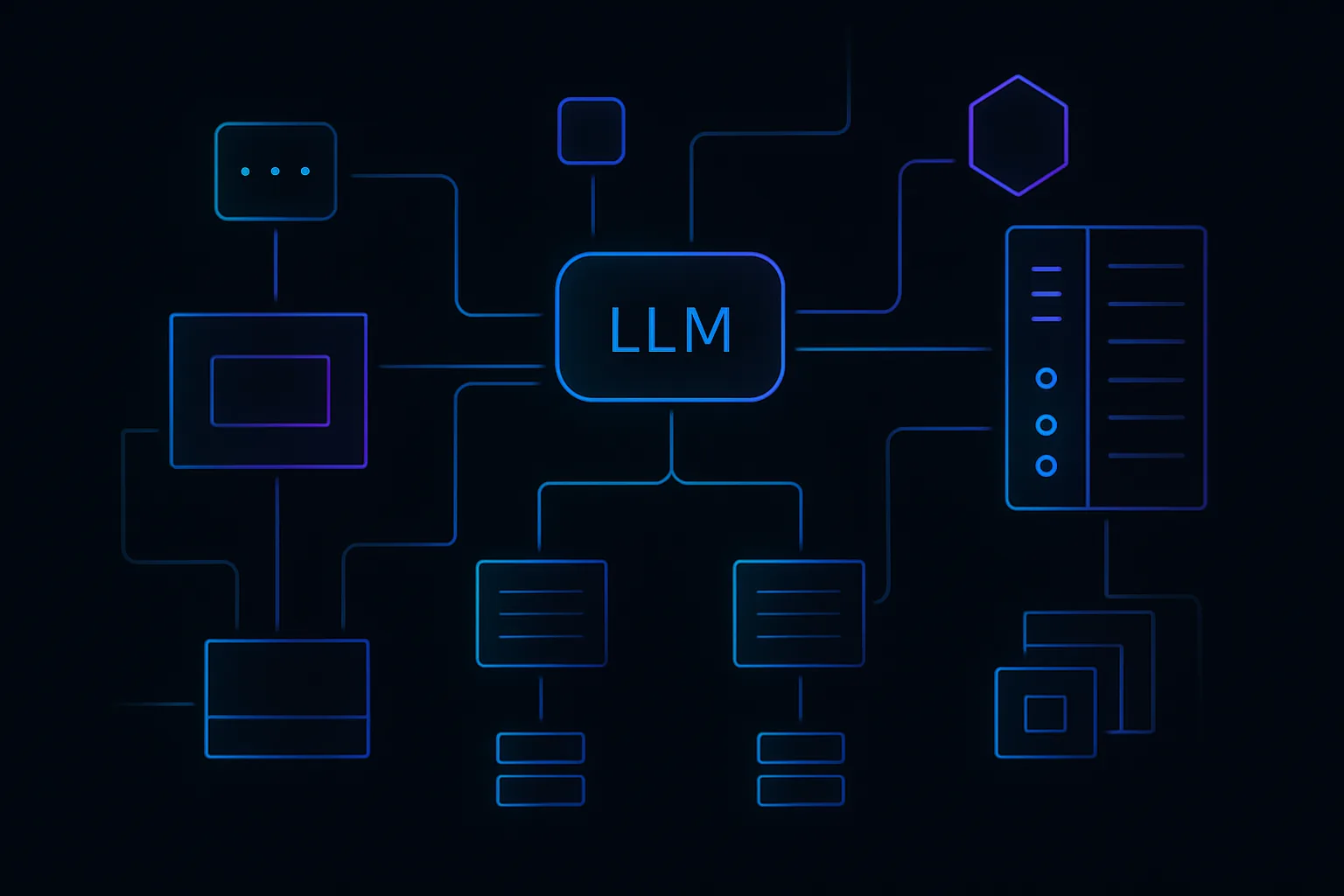
Companies like GitHub and Microsoft are already integrating LLMs into their development workflows. GitHub Copilot, for instance, uses LLMs to assist developers in writing code more efficiently. Similarly, Microsoft integrates LLMs into Azure DevOps to streamline code reviews and deployments.
Common Mistakes Engineers Make
- Over-reliance on LLMs: Assuming LLMs can replace human judgment entirely can lead to oversight of nuanced issues.
- Ignoring Model Limitations: Not all LLMs are trained equally; understanding their limitations is crucial.
- Neglecting Security: LLMs can inadvertently introduce security vulnerabilities if not properly managed.
Trade-offs and When NOT to Use This Approach
- Cost: Implementing LLMs can be expensive, both in terms of computational resources and licensing fees.
- Complexity: Integrating LLMs adds complexity to the development process, which might not be justified for smaller projects.
- Data Privacy: Using LLMs involves sharing code with third-party services, which may not be acceptable for sensitive projects.
How This Impacts System Design Interviews
As LLMs become more prevalent, system design interviews are likely to evolve. Candidates will need to demonstrate not only their coding skills but also their ability to integrate AI tools effectively. Understanding the trade-offs and limitations of LLMs will become a key part of the evaluation process.
Practical Recap
- Integrate LLMs into your IDE to enhance code quality and reduce errors.
- Automate code reviews with LLMs to speed up the process and ensure consistency.
- Use LLMs for documentation to save time and maintain accuracy.
- Implement a feedback loop to continuously improve LLM suggestions.
- Evaluate the cost and complexity before integrating LLMs into your workflow.