Serverless in 2026: The Good, The Bad, and The Expensive
As we stand on the brink of 2026, serverless computing has firmly established itself as a pivotal component of modern cloud architectures. The allure of serverless lies in its promise of reduced operational overhead, automatic scaling, and cost efficiency. However, as with any technology, it comes with its own set of challenges and trade-offs. In this post, we'll delve into the current state of serverless, exploring its benefits, drawbacks, and the often-overlooked costs.
Why Serverless Matters Now
The rapid evolution of cloud services has made serverless architectures more relevant than ever. With the increasing demand for agile development and scalable solutions, serverless offers a compelling model for deploying applications without the need to manage infrastructure. As organizations strive to innovate faster, serverless provides a way to focus on code and business logic, leaving infrastructure concerns to cloud providers.
Deep Dive into Serverless Concepts
Serverless computing, often associated with Function as a Service (FaaS), allows developers to execute code in response to events without provisioning or managing servers. Popular platforms like AWS Lambda, Azure Functions, and Google Cloud Functions have matured, offering robust ecosystems for building serverless applications.
Example: Java Spring Boot with AWS Lambda
import org.springframework.cloud.function.adapter.aws.SpringBootRequestHandler;

public class MyLambdaHandler extends SpringBootRequestHandler<String, String> {
    // Your handler logic here
}
In this example, a Spring Boot application is adapted to run on AWS Lambda, showcasing how traditional Java applications can leverage serverless platforms.
Real-World Use Cases and Architecture Patterns
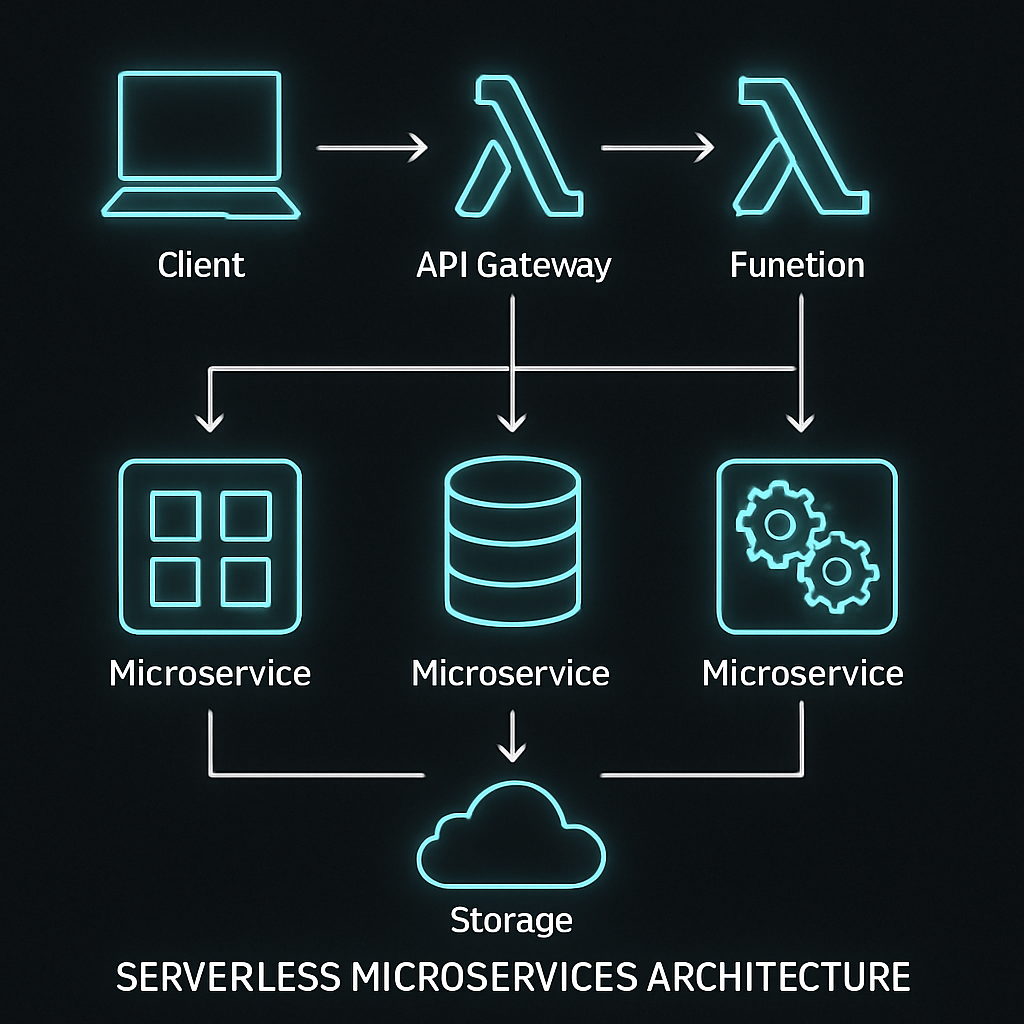
Serverless is particularly well-suited for event-driven architectures, microservices, and applications with unpredictable workloads. Consider a real-time data processing pipeline:
This architecture illustrates how serverless components can be orchestrated to handle data ingestion, processing, and storage efficiently.
The Good: Pros of Serverless
- Scalability: Serverless functions automatically scale with demand, handling thousands of concurrent requests seamlessly.
- Reduced Operational Overhead: Developers can focus on writing code, while the cloud provider manages infrastructure concerns.
- Cost Efficiency: Pay-per-use pricing models ensure that you only pay for the compute time you consume.
The Bad: Cons and Challenges
- Cold Starts: Latency introduced by initializing serverless functions can impact performance, especially for latency-sensitive applications.
- Vendor Lock-In: Relying heavily on a specific cloud provider's serverless offerings can lead to challenges in migrating to other platforms.
- Complexity in Debugging: Distributed nature of serverless applications can complicate debugging and monitoring.
The Expensive: Hidden Costs
While serverless promises cost savings, there are hidden costs to consider:
- Data Transfer Costs: High volumes of data transfer between serverless functions and other services can lead to unexpected expenses.
- Over-Provisioning: Misconfigured functions or excessive invocations can inflate costs.
- Third-Party Integrations: Costs associated with integrating third-party services can add up.
Common Mistakes Engineers Make
- Ignoring Cold Starts: Failing to account for cold start latency can lead to suboptimal user experiences.
- Overlooking Security: Assuming serverless is inherently secure can lead to vulnerabilities.
- Misjudging Costs: Not monitoring usage patterns can result in unexpected bills.
When NOT to Use This Approach
- Long-Running Processes: Serverless is not ideal for tasks requiring extended execution times.
- High-Performance Computing: Applications demanding low-latency and high-throughput may suffer from serverless limitations.
- Complex Transactional Workflows: Serverless can complicate state management and transactional integrity.
How This Impacts System Design Interviews
Understanding serverless architectures is increasingly important in system design interviews. Candidates should be prepared to discuss trade-offs, scalability, and cost implications of serverless solutions. Demonstrating knowledge of when to use or avoid serverless can set candidates apart.
Best Practices / Recommendations
- Optimize Cold Starts: Use provisioned concurrency or keep functions warm to mitigate cold start issues.
- Monitor and Optimize Costs: Regularly review usage patterns and optimize function configurations.
- Embrace Observability: Implement robust logging and monitoring to gain insights into serverless applications.
Future Outlook
As serverless technology continues to evolve, we can expect improvements in cold start performance, enhanced tooling for debugging, and more flexible pricing models. The integration of AI and machine learning with serverless platforms will open new possibilities for intelligent, event-driven applications.
Conclusion: Key Takeaways
Serverless computing offers a powerful paradigm for building scalable, cost-effective applications. However, engineers must navigate its complexities and hidden costs to fully realize its potential. By understanding the trade-offs and best practices, developers can harness the benefits of serverless while mitigating its challenges.
In 2026, serverless will continue to be a critical component of cloud strategies, driving innovation and efficiency in software development.